
What "Ways to Win" Actually Means on a US Slot Machine
"Ways to win" is not marketing fluff — it is a hard mathematical promise about how many distinct symbol-path combinations can trigger a payout on a single spin. On a US slot machine, this term describes the total count of left-to-right adjacent-reel symbol alignments that qualify as a win, and it is calculated by multiplying the number of visible symbol positions on each reel. A 6x4 layout with no paylines uses 4,096 ways to win; a 6x5 layout pushes that to 15,625. The number is fixed by the reel configuration, not by your bet size, and it never changes mid-session. 🎰
The Payline Myth Versus the Ways-to-Win Engine
Old-school three-reel machines paid only on a fixed set of paylines — typically 1, 5, 9, or 20 lines — and every line required a separate credit. The ways-to-win model detonated that structure entirely. There are no lines to buy, no left-to-right path to trace, and no "line bet" multiplier hiding in the interface. Instead, every symbol that lands in an adjacent reel position connects, so long as it appears on consecutive reels starting from the leftmost one. That is why a slot with 243 ways to win feels fundamentally different from a 20-line machine: the hit frequency climbs because the game evaluates thousands of symbol combinations per spin rather than a handful. If you see a machine advertising ways to win alongside 1,024 or 3,125 combinations, that figure is the raw product of visible rows per reel — nothing more, nothing less.
Why the Reel Grid Math Matters More Than the Advertised Number
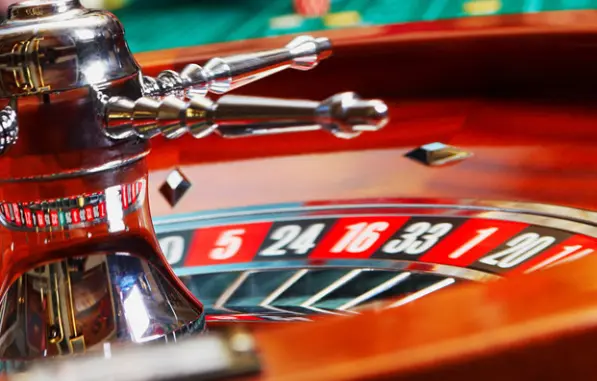
Here is where operators get cute. A machine can advertise "243 ways to win," but the actual payout structure is governed by symbol weighting, not the ways count. The ways number tells you how many combination slots exist; it says nothing about how often premium symbols land in those slots. A 4,096-ways game with brutally low symbol frequency on the top-paying icon will drain a bankroll faster than a 243-ways machine with generous mid-tier pays. Sharp players ignore the headline ways figure and reverse-engineer the symbol distribution: count how often the highest-value symbol appears across 200 or 300 spins, and you will see whether the grid is genuinely open or just numerically impressive. 💡
The 1,024 vs 15,625 Trap in Modern Cabinet Design
US slot manufacturers love escalating ways counts because bigger numbers sell cabinets. But the real mechanic that matters is whether the game uses "ways" evaluation with stacked symbols or expanding wilds — because those features can multiply the effective combination count beyond the base grid. A 1,024-ways machine with a full-reel wild expansion can momentarily behave like a 15,625-ways game during the bonus round. That divergence is exactly where the ways to win structure becomes exploitable in free-spin features, since the evaluation engine re-runs the full combination matrix on every spin of the feature rather than locking a fixed line set. Audit the paytable before you commit a single credit: the ways count is static, but the feature behavior is where the volatility lives.

What the Ways Count Never Tells You About Volatility
A 243-ways machine and a 7,776-ways machine can carry identical RTP — often in the 94% to 96% band on US casino floors — because the ways multiplier and the symbol weighting are tuned against each other by the math team. The ways figure is a combination-space descriptor, not a payout promise. Two machines with the same ways count can swing wildly in variance depending on whether the design rewards frequent small hits or rare massive multipliers. The only reliable read is the paytable's symbol hierarchy combined with the bonus trigger frequency. 🎲
Treat "ways to win" as a structural label that describes the evaluation grid, then immediately pivot to the paytable's symbol weights and the feature trigger rate — those two data points determine whether the machine is a grind or a jackpot hunter, and the advertised combination count on the glass panel is nothing but a number.