
The Cut Card Is Not a Decoration
Casinos bury the cut card position deep inside their floor manuals, and that single plastic rectangle dictates whether your entire counting approach is mathematically viable or a complete waste of brain cells. The Baccarat Shoe Cut Card Depth is the most under-discussed variable in the entire advantage play world, and most players never even think about it. They walk up, see six decks in the shoe, assume everything is uniform, and start their mental tracking like a machine. That's the amateur move. The placement of that card determines how many hands you actually get to observe before penetration resets. A shallow cut card position means fewer rounds per shoe, faster shuffle cycles, and a counting window so short that your edge evaporates before you can exploit it. 🎯
Why Shoe Depth Changes Everything for Baccarat Counting
Standard baccarat shoes run eight decks in most Asian and Macau-style operations, with cut card placement typically leaving anywhere from 14 to 22 cards behind the card. That's your penetration window. If the cut card sits at 16 cards from the back, you're looking at roughly 400 hands per eight-deck shoe. Drop that to 10 cards behind and you're suddenly at 410 to 415 hands. That 10 to 15 hand swing matters when you're running a Baccarat Counting Practical Strategy that relies on edge-triggering on specific card compositions. The deeper the penetration, the more reliable your running count correlation becomes with actual remaining deck composition.
Here's the dirty secret the floor managers don't want you calculating: every card behind the cut card is a card you never see. That's dead information. If the casino sets the cut card 26 cards from the back on an eight-deck shoe, you're losing nearly 3.2% of the total card volume to the void. That's not random noise. That's systematic information asymmetry baked into the hardware setup. The house isn't just relying on the house edge — they're relying on you not doing the penetration math. And most players don't.
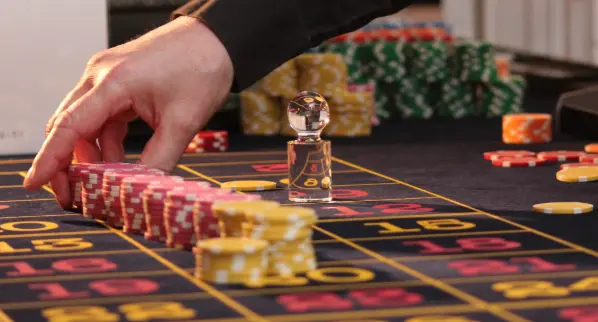
The Hardware Side Nobody Talks About
Automatic shufflers and manual shuffle rigs both handle cut card insertion differently, and this is where the real audit begins. Manual shoes allow the dealer to eyeball the placement, and human variance means you'll see cut card depth fluctuate between 12 and 24 cards across dealers. That variance is your friend. A dealer who consistently cuts shallow is giving you more hands per shoe, which compounds your observation window across multiple shoes. A dealer who buries the cut card deep is forcing you into a low-information environment. Know your dealer rotation before you commit to any Baccarat Shoe Cut Card Depth exploitation model.
Automatic shufflers are a different beast. They enforce a fixed cut card position, usually programmed to a specific card offset that never varies. You can't count on dealer variance there. You have to count on mathematical precision, which means your strategy needs to be calibrated to that exact fixed depth. If the machine cuts at 18 cards behind on every shoe, your counting model must assume 18 cards of blindness every single cycle. No exceptions. No adjustments.

Penetration Math That Actually Matters
Run the numbers on an eight-deck shoe with a cut card 14 cards from the back. Total cards: 416. Cards in play before cut card triggers: 402. That's 96.6% penetration. Now compare that to a cut card 24 cards from the back: 392 cards in play, 94.2% penetration. That 2.4% difference might sound trivial until you realize it's roughly 10 extra hands per shoe. Over a 60-shoe session, that's 600 hands of additional observation data. That's the difference between a counting strategy that converges on a reliable signal and one that drowns in statistical noise. 🃏
The practical takeaway is brutal and simple: never run a baccarat counting model without first confirming the cut card depth on the table you're playing. Ask the dealer. Watch a few shoes. Count the cards manually if you have to. If the depth is inconsistent or deeper than 22 cards behind, walk away. The math doesn't work. Your edge doesn't exist. The shoe is stacked against your observation window before you even place your first bet. And the players who ignore this variable are the ones funding the casino's quarterly earnings report while wondering why their "system" never quite delivers.