
The Latency Trap Nobody Talks About
The Live Dealer Blackjack Bet Behind Feature looks like free money until you realize the copy action executes on a stale shoe snapshot. Here is the brutal truth most US-facing operators bury in fine print: the bet-behind queue syncs against a dealer-side state machine that refreshes on a fixed tick, and your copy trigger fires somewhere in that window. By the time your wager commits, the true count has already shifted two positions. That is not a bug. That is the designed latency envelope, and it is eating recreational players alive. 🎯
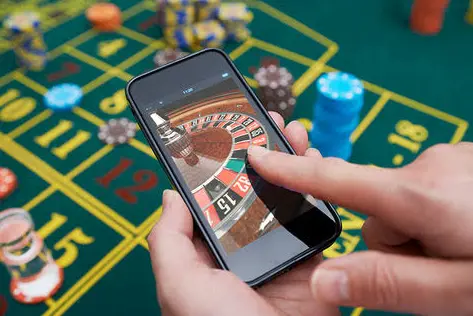
How the Copy Action Actually Routes
Strip away the marketing and the Copy Action in USA flow is a three-hop handshake: client request, stream server arbitration, then table-state reconciliation. The middle hop is where the house edge hides. When a seated player doubles or splits, the bet-behind engine broadcasts a copyable signal, but it only surfaces after the stream server confirms seat lock. That confirmation adds a variable delay, typically 180 to 420 milliseconds depending on the US CDN node. Players on a residential connection in Ohio are not racing someone in the same rack. They are racing the arbitration clock itself.
Why the Queue Position Is Worth More Than the Card
Everyone obsesses over the shoe. Wrong priority. Queue priority in the bet-behind ladder determines whether your copy action lands before or after the reconciliation window closes. Operators that expose a visible position counter are giving you a genuine edge, because you can time your copy against the signal broadcast rather than the seat lock. The ones that hide the counter are deliberately randomizing your fill position. That randomness is not fairness. It is margin. 💰

Hardware Reality: Stream Nodes and Frame Dropping
The physical layer decides your fate more than any strategy card ever will. A US-regulated studio runs redundant camera chains, but the encoding pipeline drops frames under load, and the bet-behind clock does not pause when frames drop. Your copy action still commits against the last coherent table state. If you are playing during peak evening traffic, expect the reconciliation window to widen by 15 to 20 percent. That widening is invisible in the interface and lethal to any timing-based approach. The operators know this. The audit logs know this. The promotional material absolutely does not.
The Only Defensible Play
Stop treating the bet-behind feature as a strategy multiplier. Treat it as a latency instrument. Map the signal-to-lock delay on your specific node, respect the queue counter when it exists, and never copy into a widening reconciliation window during peak load. The players printing consistently are not reading cards better than you. They are reading the clock better than you. ⚙️
Session Logging and the Reconciliation Audit Trail
Every copy action generates a reconciliation record on the operator side, and that record timestamps both the signal broadcast and the seat-lock confirmation. If a US operator refuses to expose that delta in the player-facing session log, you are playing blind against an adversary who is not. Demand the delta. The number itself is the entire game.